26 Jan
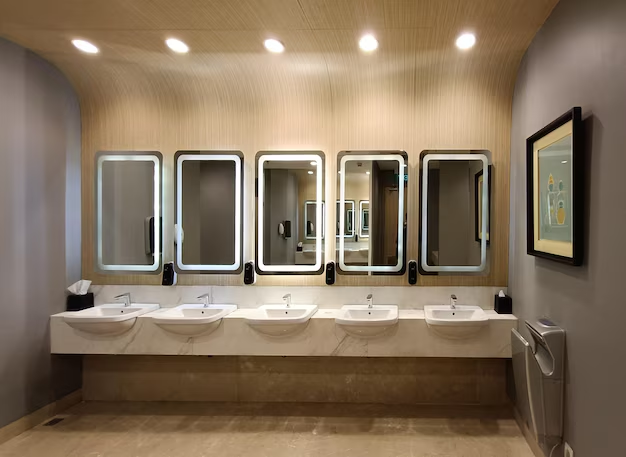
What’s Involved in a Commercial Washroom Installation?
A commercial washroom installation is very different from a domestic bathroom project. It involves higher usage levels, stricter compliance requirements, and a need for durability, hygiene and long-term performance.
Whether you are fitting out a new building or replacing an existing facility, understanding what’s involved helps you plan properly, control disruption, and achieve a washroom that works for your business.
What Is a Commercial Washroom Installation?
A commercial washroom installation covers the full process of designing, building or refurbishing washroom facilities in non-domestic environments. This includes workplaces, industrial sites, public buildings, education settings and multi-occupancy premises.
Unlike domestic bathrooms, commercial washrooms must be designed to cope with frequent use, meet accessibility and safety standards, and remain easy to clean and maintain over time.
Key Stages of a Commercial Washroom Installation
Although every project is different, most commercial washroom installations follow a similar structure.
Initial Survey and Planning
The first step is assessing the existing space or proposed layout. This includes reviewing plumbing and drainage, electrical provision, ventilation, accessibility requirements and how the washroom will be used day to day.
At this stage, practical considerations are identified, such as working around occupied buildings, phasing works to reduce downtime, and ensuring compliance with current regulations.
Design and Specification
Once requirements are clear, the washroom is designed with function, durability and hygiene in mind. This includes layout, materials, finishes and fittings suitable for high-traffic use.
Good design balances practicality with appearance, ensuring the washroom reflects the environment it sits in while remaining easy to clean and maintain.
Strip-Out and Preparation
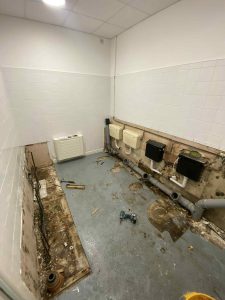
For refurbishment projects, existing fittings, partitions and finishes are removed. This stage often reveals hidden issues such as outdated plumbing or damaged substrates, which are addressed before installation begins.
Preparation work is critical to ensure the new installation performs as expected and avoids future maintenance problems.
Installation and Fit Out
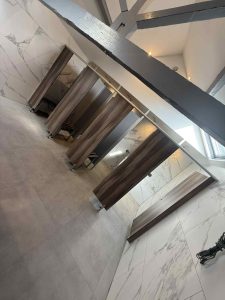
The installation phase includes plumbing, electrical work, flooring, wall finishes, partitions, cubicles and fixtures. In commercial environments, accuracy and coordination between trades is essential.
Experienced installers work methodically to maintain quality while keeping disruption to a minimum, especially in live buildings.
Testing, Compliance and Handover
Once installation is complete, systems are tested and the washroom is checked against specification and compliance requirements. The finished space is then handed over ready for use.
This final stage ensures the washroom is safe, functional and built to last.
Why Commercial Installations Are Different from Domestic Work
Commercial washrooms face far greater demands than domestic bathrooms. Poor design or shortcuts often lead to higher maintenance costs, hygiene issues and premature replacement.
Key differences include:
-
Higher footfall and wear
-
Greater focus on hygiene and ease of cleaning
-
Accessibility and compliance requirements
-
Robust materials and fixings
-
Long-term operational efficiency
Using installers who understand these differences is essential for a successful outcome.
Compliance and Accessibility Considerations
Commercial washroom installations must comply with current building regulations and accessibility standards. This often includes provision for disabled and accessible washrooms, appropriate layouts, and suitable fittings.
Compliance is not just a legal requirement, it ensures washrooms are usable and safe for everyone who needs them.
Working in Live Environments
Many commercial washroom installations take place in buildings that remain operational. Careful planning allows work to be phased, scheduled out of hours, or limited to specific areas to reduce disruption.
Clear communication and experience working in occupied buildings makes a significant difference to how smoothly a project runs.
Why Experience Matters
A commercial washroom installation is an investment. Choosing a specialist contractor helps ensure the finished result meets operational needs, remains compliant, and performs reliably over time.
An experienced team manages the entire process, coordinates all trades, and delivers a consistent standard from start to finish.
Planning a Commercial Washroom Installation
If you are considering a new installation or refurbishment, early planning and expert input can prevent issues later in the project. Understanding what’s involved allows you to make informed decisions and achieve a washroom that supports your business long term.
If you would like to discuss a commercial washroom installation or refurbishment, B&A Installations can advise on the best approach for your site and requirements.